

Wooden Indonesian Kerises
James Gouijn-Stook
I carve these pieces from branches I find while hiking or on long walks. Being of Indonesian and Dutch heritage, my work is inspired by traditional Indonesian kerises. My uncle was deeply connected to Indonesian culture and its spiritual traditions.
The keris (or kris) is a ceremonial dagger with deep cultural and spiritual significance throughout Indonesia. Traditionally forged from layers of iron and steel, often with a gracefully wavy blade, the keris may serve as an heirloom, ceremonial object, or symbol of identity and status. Kerises are also believed to possess spiritual qualities.
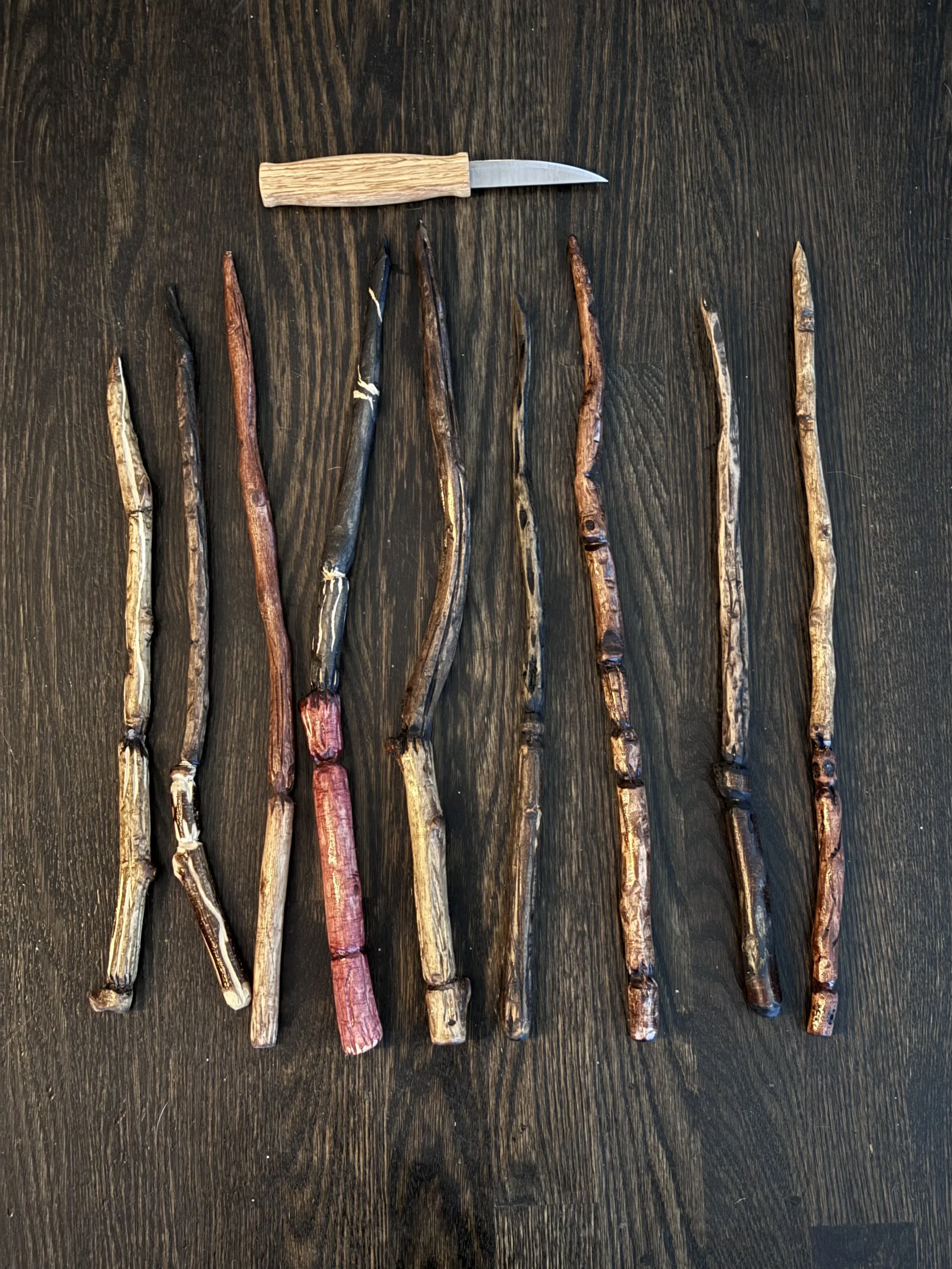
My wooden kerises are not intended as replicas of traditional forged kerises, but rather as my own creative interpretations. They are, however, ceremonial objects to me. Through making them, I explore the keris as a form—its movement, symbolism, and sense of presence. I ritualize the activity from start to finish, allowing the slow, attentive process to become part of my spiritual practice. I approach each piece with respect for the Indonesian traditions that inspired it, while allowing each carving to become a personal expression.
The process of carving these kerises not only informs my meditation practice; it is my practice. When I carve, I am not particularly interested in the finished product—a beautiful keris—but rather in the process itself. The same attitude applies to sitting meditation. I engage with the act of sitting rather than focusing on, or becoming overly concerned with, enlightenment. After all, in both instances, it is only the process with which we can truly engage.
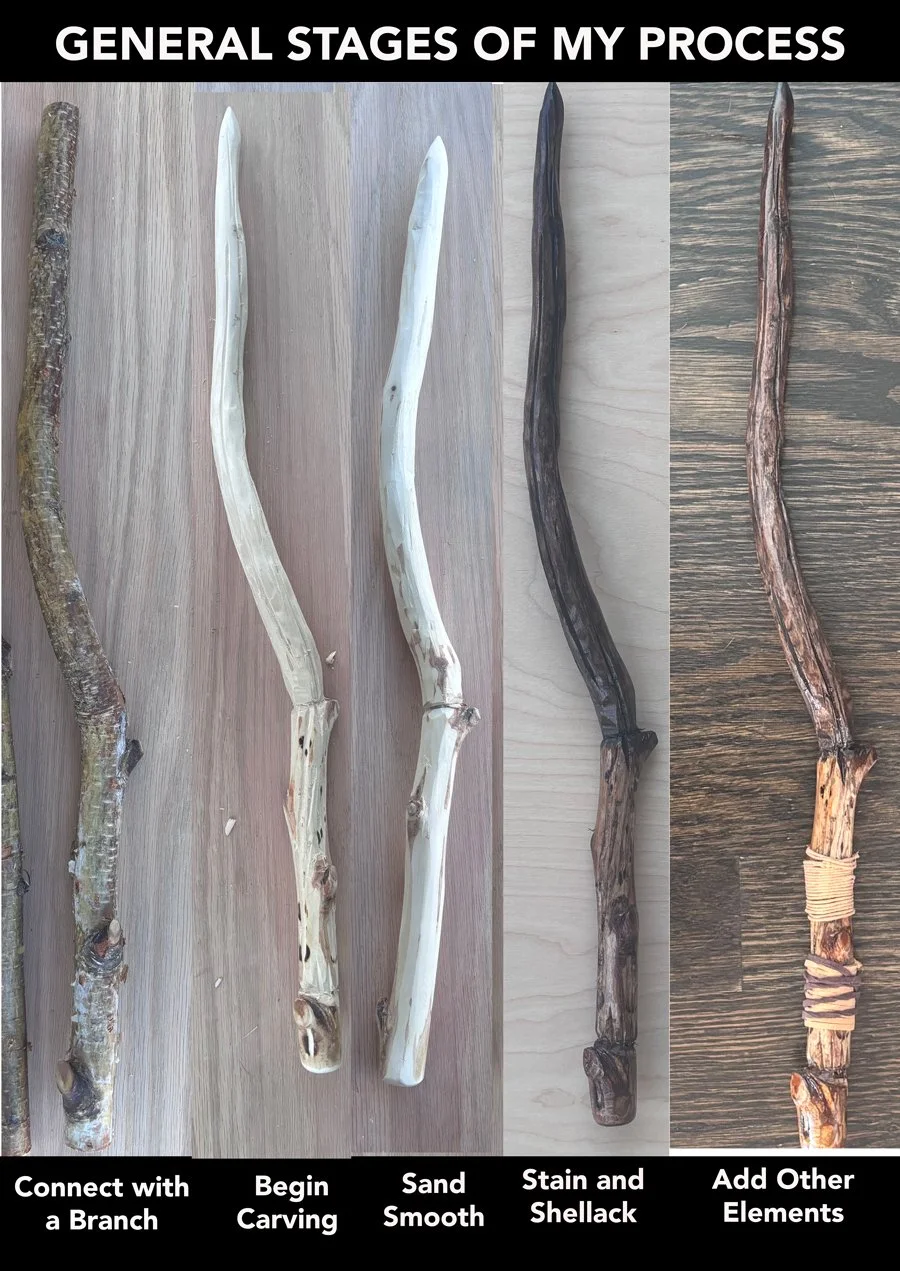
Both carving and sitting require constant, penetrating attention. Yet in both, a kind of laziness can develop. A few months ago, while carving one of these kerises, my knife slipped, severely cutting the inside of my hand and requiring twelve stitches. I have been carving wood for decades, and over time, I had abandoned many of the safety measures I once followed meticulously. I had begun taking the process for granted, believing I was beyond the need for such care, beyond the need for persistent attention. My mind wandered, the knife slipped, and I suffered a deep cut.
Yet the injury was a gift. It reminded me that my sitting practice, too, can become routine, lazy, and predictable—an exercise performed without genuine attention, becoming formulaic and dull.
The sharp edge of a carving knife, carefully and slowly slicing away anything “extra,” reminds me to sit with that same kind of edge—a sharpness of attention that is alive, empowering, and alert. It allows me to recognize when I become caught up in my stories, opinions, and internal dialogue.
If my carving blade becomes dull, or my attention wanders, I can slip and cause injury. And if my sitting becomes listless, it, too, can do damage.
My hope is to continue honing my blade of attention off the cushion, becoming just a little clearer each day. I hope to cut away even the smallest piece of the illusory self, and in doing so, become more responsive and helpful to those around me.
[next article]