

Zen Practice and Art
Guillermo Echanique
In common parlance, a moment of Zen is a brief, and often surreal video clip. It forces viewers to step back from analytical thought and process a strange piece of reality. Yet, in our practice, we do not refer to any moment as separate from our daily lives. If there is a moment of transcendence or clarity it is because the moment points to the unity of all phenomena.
Consider Zen Master Seung Sahn teaching that “everyday mind is Zen mind.” Every day, every aspect of our lives, every encounter, is already complete as it is. A caveat is that we should not attach to the moment or the experience. We should let it appear and disappear much as clouds move in the sky.
How can we then explain Art? Is Art already a concept unimportant to our practice? Of course not. But its seeds are there.
The Birth of Art
A cup sits on a table. Someone picks it up and drinks. Someone else paints it, photographs it, writes a poem about it, or makes a cup of their own. When does Art enter the room?
The answer is not beauty, originality, or technical skill. Nor does the answer need an extraordinary object or an extraordinary state of mind.
Consider a working definition:
Art is the intentional shaping of experience into a form that invites another experience.
This definition places Art within ordinary life. This is where Zen Master Seung Sahn tells us to look.
“Everyday mind is Zen mind.”
But what does that mean for an artist? More, what does it mean for someone who practices Zen and also makes Art? The connection begins long before the artist picks up a brush, a pen, a musical instrument, a camera, or a piece of wood.
Practice: Nothing Special
In the Korean Zen tradition, practice is not confined to a philosophical understanding of Buddhism. It is something we do. We sit. We bow. We chant. We work with kong-ans. And then we go home, wash the dishes, argue with our spouses, pay the bills, walk the dog, and try to remember where we left our glasses. Everyday mind.
The formal practices of Zen may seem removed from artistic creation. Sitting in silence does not produce a painting. Bowing does not write a poem. Chanting does not turn someone into a musician.
Yet each practice provides a different opportunity to examine our relationship with experience.
In sitting meditation, we watch thoughts come and go like trains at a station. We notice them arrive and leave. We let them go. But if we find ourselves in Philadelphia, we return to our practice.
In bowing, the body participates completely. There is movement, repetition, balance, effort, and the continual encounter with our preferences. We want to stop. We lose the count. Our knees complain. We bow anyway, within the limits of what our bodies permit.
In chanting, breath, voice, rhythm, and listening come together. The individual voice participates in something larger. Sometimes we are completely present. Sometimes we are thinking about lunch. As soon as possible, we return to chanting and the moktak: Tak, tak, tak, tak.
These activities do not end thought, emotion, or distraction. They help us recognize them, accept them and then do what needs to be done. Our purpose motivates us: together action, our commonality of effort and intention.
This is an important distinction. Zen is not the manufacture of clear mind. Nor is it a technique for producing artistic inspiration. It is practice in experiencing. And experience is the material from which Art grows.
From the Meditation Hall to Everyday Life
What happens when we leave the meditation hall? Nothing changes. But everything changes: we must now interact with our dynamic surroundings. Yet, the same attention we cultivate while sitting must come with us. In the kitchen, the street, the workplace, or the studio. Our intention to attend, best as we can each moment of our lives, is the foundation of our practice. Our meditation hall expands into our lives, moment by moment.
Zen Master Seung Sahn emphasized the importance of concentration while performing ordinary activities. His instruction, “When you are doing something, just do it,” is simple. When eating, just eat. When walking, just walk. When painting, just paint.
Of course, anyone who has practiced Zen knows that this is easier said than done. The mind wanders. It judges. It remembers yesterday and rehearses tomorrow. It argues with people who aren’t even present.
And sometimes, in the middle of all this noise, something catches our attention. A shadow crosses the wall. A pigeon lands across the way. Someone says something unexpected. A fire engine siren emerges from the sounds of traffic. A face reveals an emotion we had never noticed before.
These moments are not transcendent. They are ordinary experiences, noticed. They add to the sum total of “everyday mind.” They may also become the beginnings of Art.
Formal Zen practice can help develop the capacity to recognize such moments. But recognition alone does not produce an artwork. Something else must happen.
The Kong-an: When Thinking Is Not Enough
Kong-an practice, central to Zen Master Seung Sahn’s teaching tradition, introduces another dimension. A kong-an is not a riddle that clever reasoning solves. It presents a situation that challenges our dependence on thinking.
Consider the famous question: “Why did Bodhidharma come to China?”
In Korean Seon practice, kong-an work directs us toward the immediacy of the situation. What is happening here? What is our relationship to it? How do we respond?
The kong-ans lead to the most practical inquiry: What is this? What is happening now? How can spontaneity and not intellect show our relationship to the question?
A clever intellectual explanation is not adequate. We must, spontaneously and without fear, answer. First, hit the floor, clap your hands, yell out “KATZ.” Show what words can’t. The universal interplay of everything. Then reply. Do your best.
The artistic process contains comparable moments: A sculptor removes too much wood. A musician plays an unexpected note. A poet discovers that the planned ending no longer belongs to the poem.
What now?
The artist may cling to the original intention. That risks making the poem, or the painting, or the dance, too precious. Or the artist can respond to the situation as it exists.
This is not to suggest that artistic decisions are equal to kong-an practice. Their purposes differ. But both can expose the limitations of habitual thinking. Both need an immediate, appropriate response. Both can reveal that the answer is sometimes found in doing rather than explaining.
Attention Becomes Intention
Here we arrive at the crucial distinction between Zen practice and Art. A person can wash dishes with complete attention without creating an artwork. A person can walk through a forest, observe a sunset, or listen to birds without producing Art.
Zen practice cultivates attention, but attention is not enough to define Art. The artist makes an extra move. The artist chooses: this word, not that one. This color. This sound. This movement. This silence. The artist’s intention shapes the experience.
There is an interesting tension here. Zen practice often questions our attachment to preferences and conceptual distinctions. Artistic creation requires constant decisions. This, not that. This color. This word. This movement.
The relationship is not contradictory. Zen practice may help us encounter experience before imposing our expectations upon it. Artistic practice then asks us to respond by giving some aspect of that experience form. The artist does not have to abandon judgment. The artist must learn when judgment serves the work and when it serves attachment to an idea.
The Artisan and the Artist
This raises another question. What distinguishes an artisan from an artist?
The distinction is less obvious than it first appears. An artisan possesses knowledge, technique, and practical skill. A skilled woodcarver understands the tools. The wood. The grain. The resistance.
An artist may have similar skills. In fact, the skills may be identical. Yet, technical mastery is not a prerequisite for every form of Art.
The difference cannot be that one works with the hands while the other works with the imagination. Both do both. Nor is the distinction one of quality. An exquisitely crafted object may be aesthetically unremarkable. A very simple work may provoke an extraordinary experience.
Under the proposed definition, the decisive question is not whether the maker is called an artisan or an artist. It is whether experience has been shaped into a form that invites another experience. The object is the message.
Many useful objects may also be Art. A carved figure may be both craftsmanship and artistic expression. The categories overlap. But technical mastery matters. Its conscious use may invite the eye of the beholder in effective ways.
An artistic intention without the ability to realize it may remain only an intention. There are legions of languishing would-be poets. This is where another Korean Seon teaching becomes useful.
Sudden Insight, Gradual Cultivation
The Korean Buddhist master Chinul, who lived from 1158 to 1210, promoted the idea of sudden awakening and gradual cultivation. Although an insight may occur suddenly its realization in life requires continued practice. The same pattern can illuminate artistic development. But, Chinul was teaching Buddhist cultivation, not a theory of Art.
A person may see the possibility of a sculpture. Seeing it does not confer the ability to realize it. The hand and eye must learn. The tools must become familiar. Mistakes must be made and understood. Technique must become subservient to will.
Consider James, a member of the sangha who carves figures of monks, among other things.
His work helps us examine the relationship between artistic insight and the patient acquisition of skill. The image of a monk may arise in an instant. Yet translating that image into wood is not simple. It requires a long conversation between intention, material, tools, and technique. The carver must respond to what is there.
A carving requires craftsmanship, and craftsmanship requires practice. But the completed figure may invite something beyond admiration for technical skill. The viewer may encounter stillness, humor, concentration, vulnerability. Or the unmistakable humanity of a monk.
The wood, the knife, attention, and intention have become a form through which another experience becomes possible.
James’s carving process: five photographs
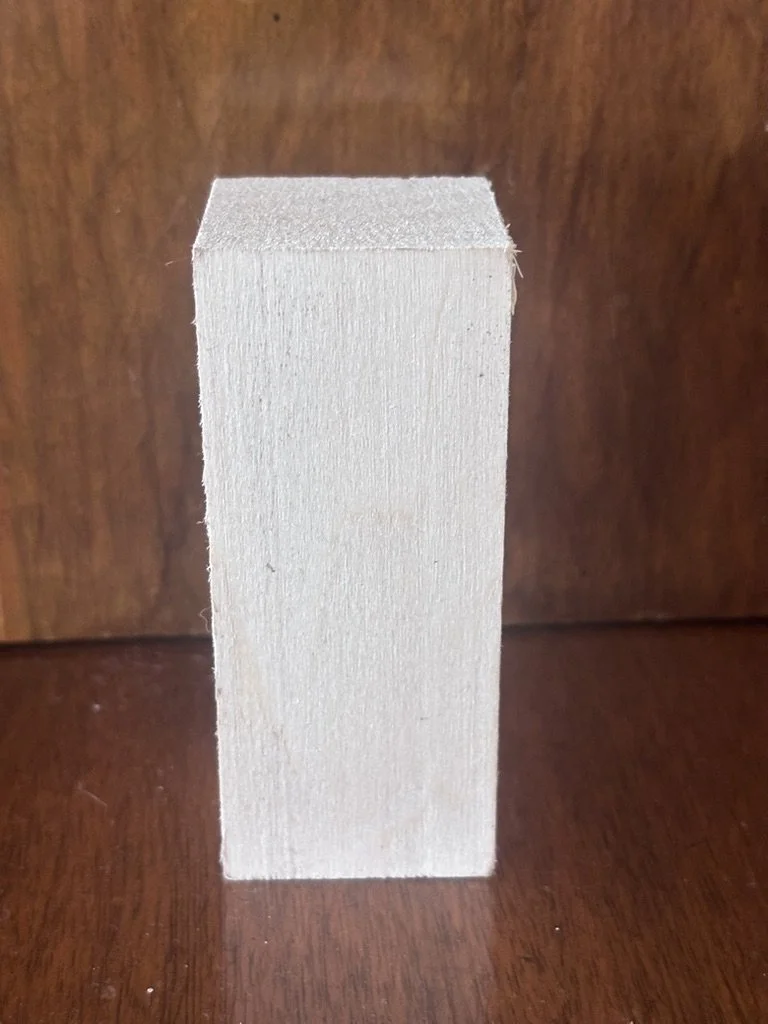
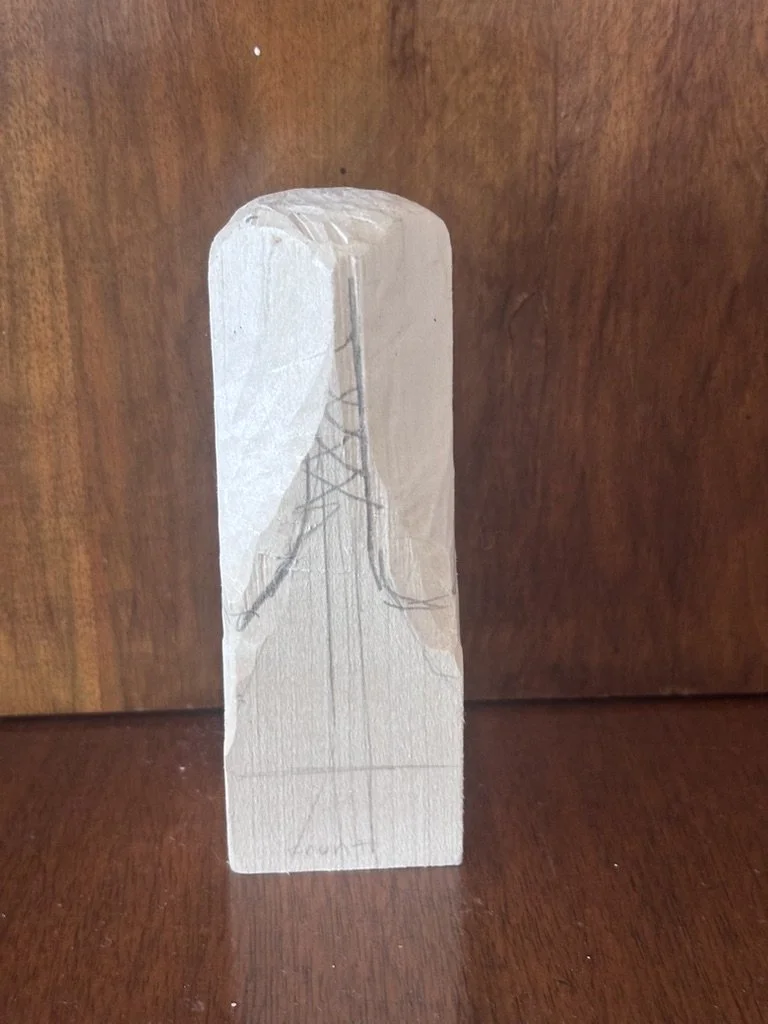
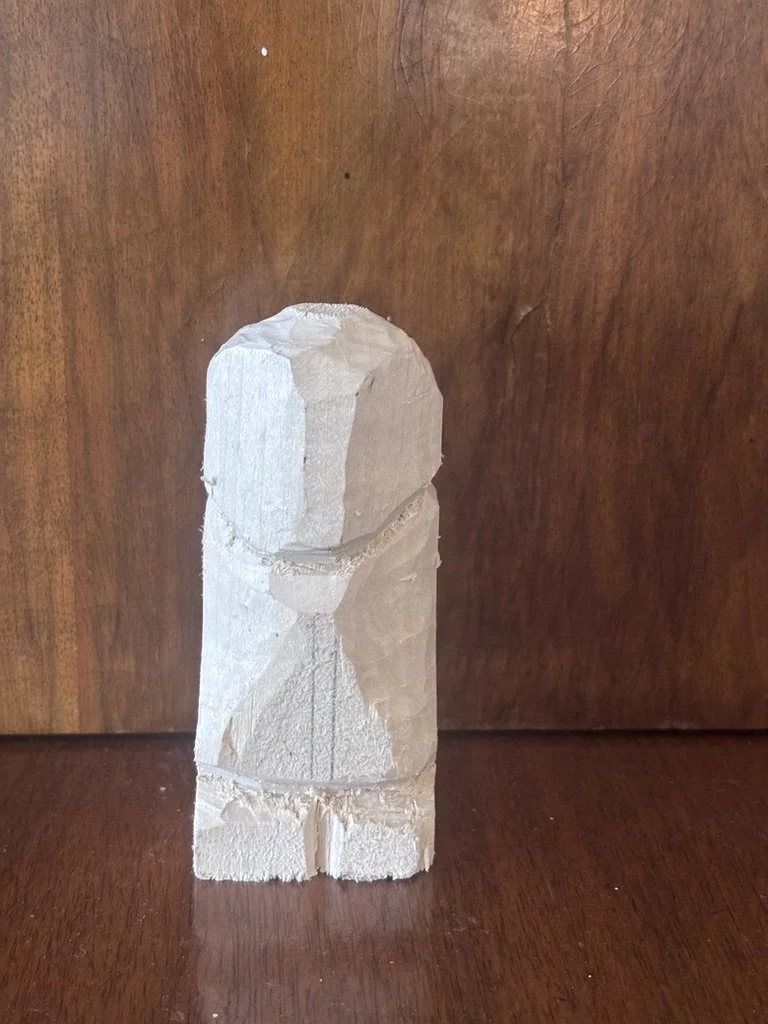
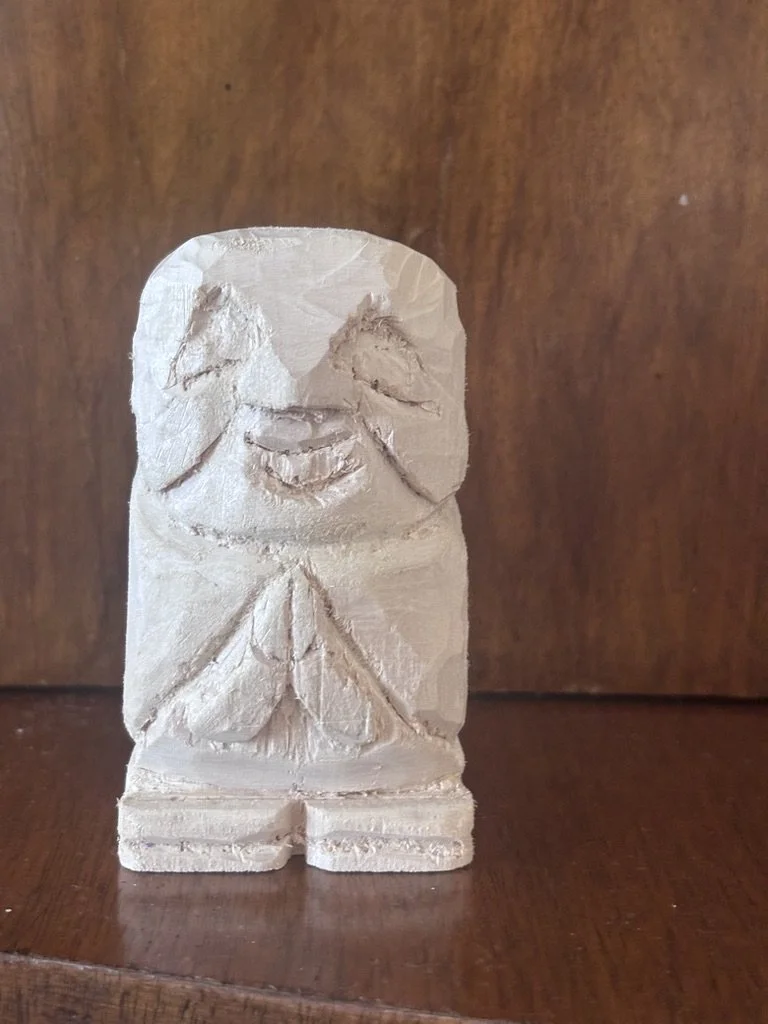
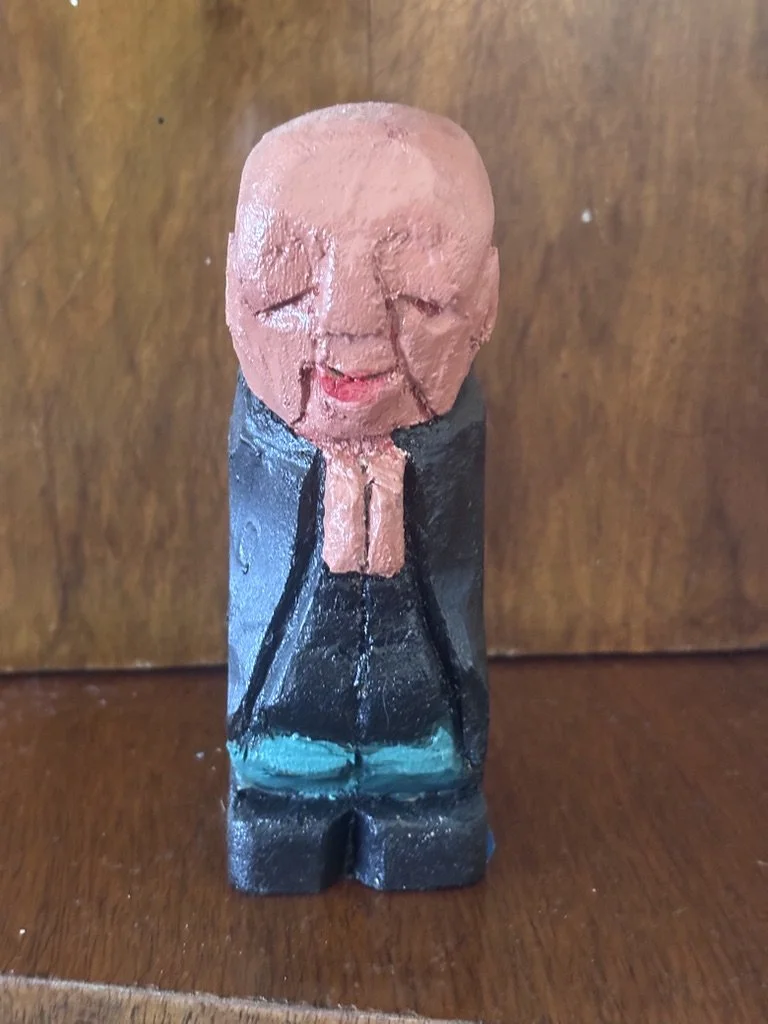
James’s carvings therefore provide a useful illustration of the relationship between creative energy, craftsmanship, and artistic expression: sudden or otherwise insight. Gradual cultivation through constant practice. And, occasionally, another sudden insight. A viewer becomes transfixed. Or offended.
Nam June Paik: The Television Is Broken. Or Is It?
The relationship between attention and artistic intention becomes especially interesting in the work of Korean-born artist Nam June Paik. He was a pioneer of video art, worked with television, electronic images, music, performance, and technology. His work often combines humor with serious questions about perception and consciousness.
In Zen for TV, an electronic malfunction produced a vertical line on a television screen. Most people would have called a repairman or the trashman. Paik recognized an artistic possibility. The unexpected image became the basis of an artwork.
View Zen for TV (1963; 1976 version) at the Smithsonian American Art Museum
The sequence is revealing: An accident occurs. Someone notices. The accident is intentionally incorporated into a form. An audience encounters that form and interacts with it. Art has entered the room.
In TV Buddha, Paik places a Buddha statue before a television displaying its own image through a live camera: the Buddha watches the Buddha watching the Buddha. Is this meditation? Self-consciousness? Narcissism? A joke? An examination of the relationship between consciousness and technology?
View TV Buddha (1974), photograph by Angus Fraser, Wikimedia Commons

Perhaps all of them. Perhaps something else. What do you experience?
John Cage: Listening to What Is Already There
American composer John Cage offers a related example.
Cage studied with D. T. Suzuki and acknowledged the importance of Zen in his intellectual development, while cautioning against reducing his work to Zen philosophy.
His composition 4′33″ is famous for the performer’s deliberate absence of conventional instrumental playing. It is actually 4′33″ of deliberate orchestral silence. Yet the audience does not experience an absence of sound. There may be coughing, breathing, footsteps, traffic, ventilation, birds, or uncomfortable shifting in chairs. The sounds were already there.
Watch a performance of 4′33″ by William Marx (YouTube)
Cage created a form in which they became the focus of attention. The composition does not require the audience to hear what Cage heard when he conceived it. Each performance offers its own experience.
Paik’s Zen for Film, with its nearly blank projection, explores a comparable possibility in the visual field. Both artists reveal something essential to the proposed definition. Art need not manufacture an extraordinary event. Sometimes it creates the conditions in which an ordinary event offers a different experience.
View Zen for Film (1965) at the Museum of Modern Art
Art Is an Invitation, Not a Delivery Service
John Dewey, in Art as Experience, argued against separating artworks from the ordinary activities and experiences of human life. In a sense, he parallels Zen Master Seung Sahn’s dictum “Everyday Mind is Zen Mind.” His approach provides a valuable Western philosophical parallel to the concerns raised here.
Art involves both making and experiencing. The person encountering the artwork is not merely a passive recipient. The artist cannot deliver an experience intact from one consciousness into another. A poem that moves one reader may irritate another. A painting that inspires one person may leave another indifferent. A piece of music may evoke memories the composer never imagined.
The artistic experience is relational. The artist shapes the form. The audience encounters it. What happens next cannot be controlled.
That is why the definition uses the word invites. What an audience experiences cannot be controlled or even predicted. The artwork becomes a meeting place between the experience of its maker and the experience of someone else.
Where Does Beauty Fit?
For centuries, beauty occupied a central place in Western philosophical discussions of Art.
But must Art be beautiful? Clearly not. Art may disturb, frighten, anger, confuse, or provoke grief. A poem about war may be artistically powerful without offering anything we ordinarily describe as beautiful.
Paik’s malfunctioning television need not be beautiful. Cage’s composition need not produce pleasant sounds. Beauty cannot therefore be the defining condition of Art.
Yet beauty remains an important possibility. Consider a Korean Joseon moon jar, with its generous white surface and imperfect roundness. Its shape may depart from geometric perfection. Those departures need not diminish its aesthetic power.
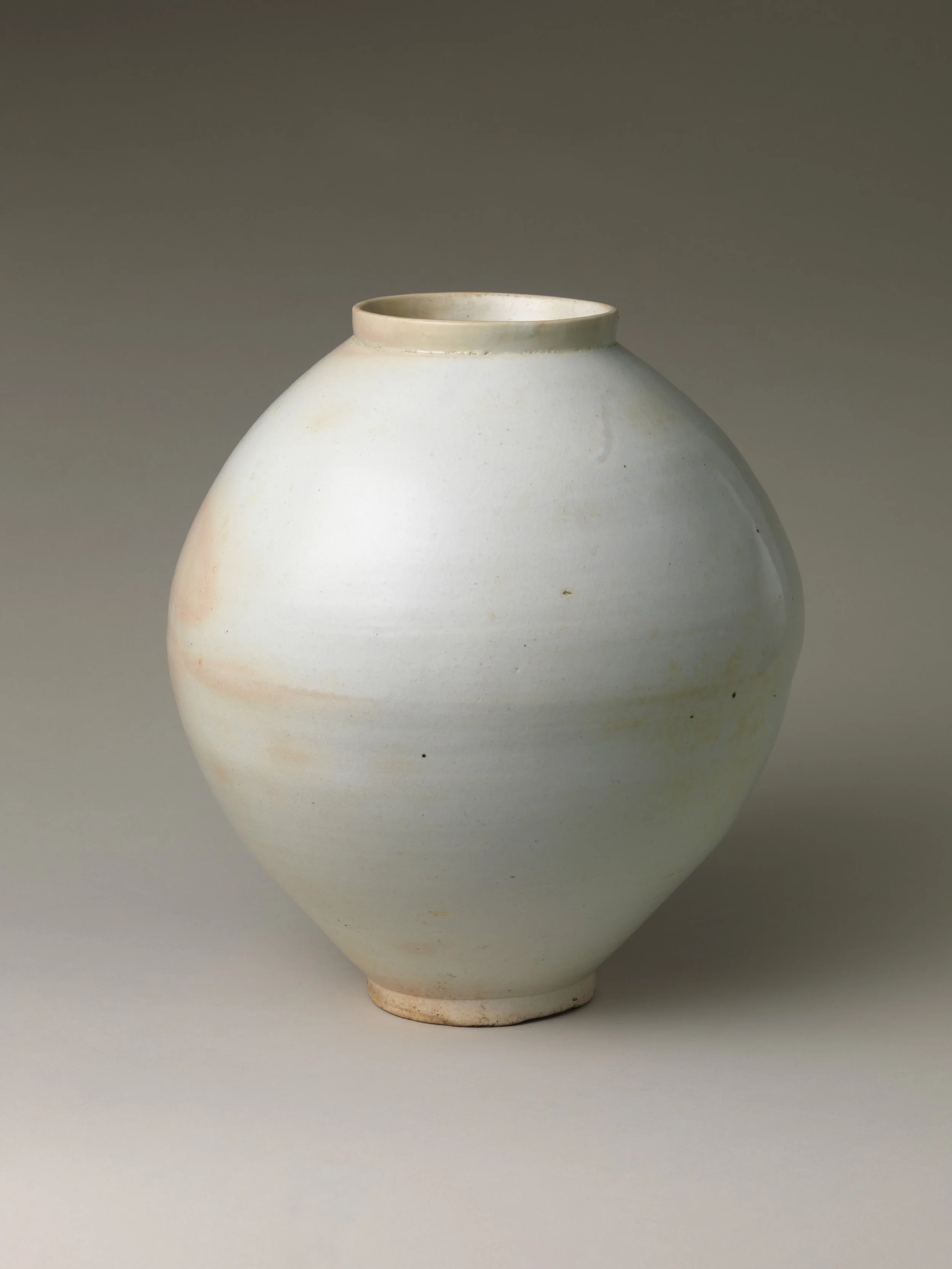
Moon jar, Joseon dynasty, second half of the 18th century. The Metropolitan Museum of Art.
But neither should we adopt the opposite dogma and declare that imperfection automatically creates beauty. Beauty is not simply perfection. Nor is it simply imperfection.
It is an experience that may arise in the encounter between perceiver and form. And beauty is not confined to Art. A sunset may be beautiful without having been intentionally shaped by an artist.
Under the proposed definition, beauty is neither necessary nor sufficient to establish that something is Art. It is one of the experiences Art may invite.
Nothing Special
Return to the cup on the table. Someone made it. Someone drinks from it. Someone notices the light falling across its surface. Someone makes a photograph. Someone writes a poem. Someone else reads the poem and remembers a cup in a kitchen half a century ago.
Experience becomes attention. Attention becomes intention. Intention becomes form. Form invites another experience. And the process begins again.
Formal Zen practice does not imply artistic creativity. Sitting, bowing, chanting, and kong-an practice do not automatically produce artists. They help us ask “What is This” moment by moment. They help us recognize what is happening before our habits and expectations carry us elsewhere. They give us repeated opportunities to see clearly, respond appropriately, and return to the task at hand.
Art asks us to do something more. We must shape what has been encountered, give it form, and offer it without controlling what another person will experience.
This space unintentionally left blank.
Seung Sahn’s “Everyday mind is Zen mind” does not turn every ordinary activity into Art. It reminds us where to begin. Not in some extraordinary world but here and right now. And if something is worth noticing, perhaps it is worth shaping.
References
• Kwan Um School of Zen. Seung Sahn, “Three Letters to a Beginner.”
• Robert E. Buswell Jr., discussion of Bojo Jinul and Korean Buddhist cultivation.
• Smithsonian American Art Museum. Nam June Paik, Zen for TV (1963; 1976 version).
• Wikimedia Commons. TV Buddha photograph by Angus Fraser (CC BY 2.0).
• Museum of Modern Art. Nam June Paik, Zen for Film (1965).
• John Cage, 4′33″. Performance by William Marx, McCallum Theatre (video).
• John Dewey, Art as Experience (1934); Stanford Encyclopedia of Philosophy, Dewey’s Aesthetics.
[next article]